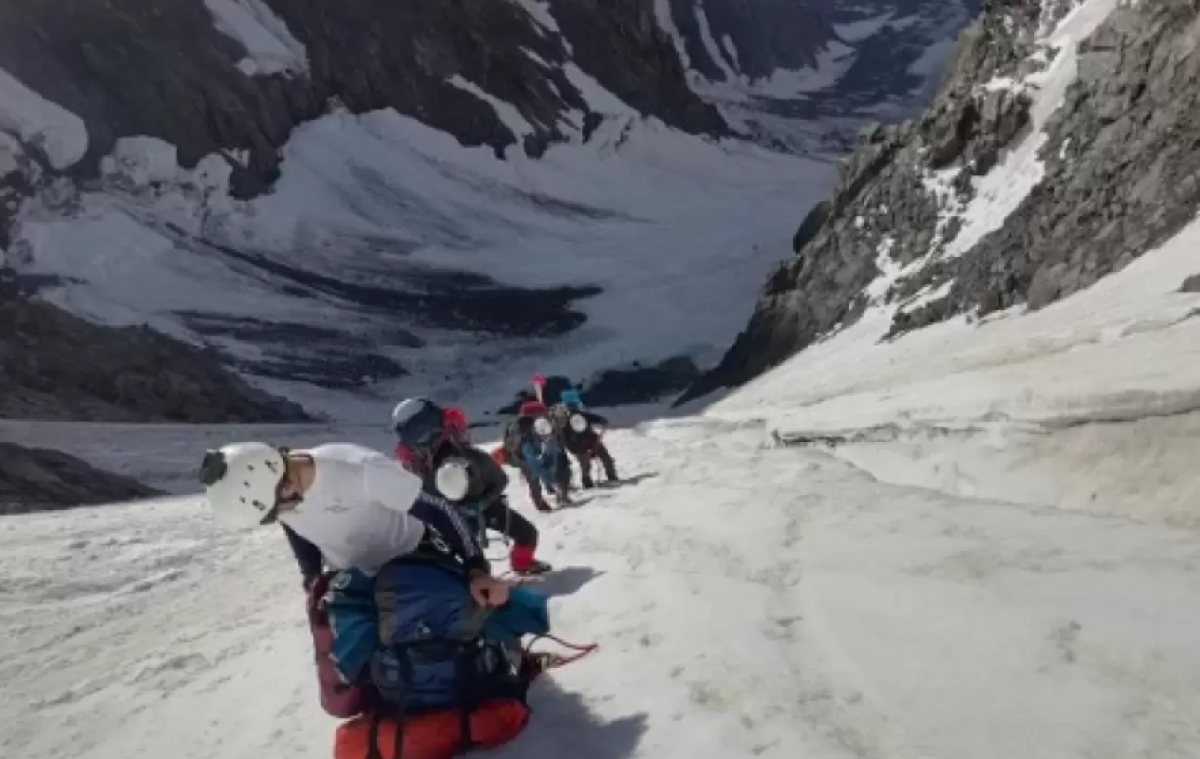
Tourism in Kazakhstan has long been discussed with a certain regret — the country has enormous potential, but much has been lacking to unlock it. Even the most beautiful destinations require transport access, service quality and infrastructure. For this reason, most visitors interested in our exotic landscapes were previously adventure-seekers.
According to Ulysmedia.kz, the situation has begun to change: statistics show that more than 10 million people stayed in Kazakhstan’s hotels last year, including about 1.5 million foreign tourists. Behind every guest is not an abstract economic figure, but real spending in specific cities and villages — on accommodation, food, transportation, excursions and other services.
Globally, tourism has long learned how to generate revenue from experiences. Countries without oil and gas — such as Spain, Turkey, and South Korea — have promoted themselves internationally through tourism, turning it into a key engine of their economies.
Тourism is often called the “soft power” of the economy. Many countries, despite lacking natural resources or heavy industry, earn significant income from travelers and thereby strengthen their financial stability. Major economies like Turkey and South Korea have also stimulated small business development through tourism.
Even the United Arab Emirates, whose economy is largely based on oil, invests heavily in tourism. As a result, the country now ranks among the world’s top six in international tourism revenues, which account for 12–14% of its GDP.
Turkey — the fourth most visited country in the world — earned $61.1 billion from tourism.
Tourism has proven it can generate employment and income, but it requires effort: building hotels and restaurants, constructing roads and creating routes. Kazakhstan has now begun moving in this direction.
According to the Ministry of Tourism and Sports, 10.1 million tourists stayed in hotels across the country last year. The number of foreign visitors reached about 1.5 million people, 15.8% more than the previous year. They spend money not only on hotels and food, but also on shopping, cultural events and entertainment services. It can therefore be concluded that tourism in Kazakhstan, long seen as a promising but ineffective asset, is turning into a real economic mechanism.
The country’s most populous city welcomed 1.8 million travelers in 2025 and became Central Asia’s tourism magnet. More than 500,000 visitors came from abroad. Over the first 11 months of 2025, investment in fixed capital in the tourism sector reached 171.6 billion tenge. Investors commissioned 46 tourism facilities in the city last year.
Almaty received the status of a World Craft City and hosted the international ALA CRAFT 2025 festival with around 100 artisans. The city also joined the World Tourism Alliance, which unites 251 members from 41 countries.
Almaty was included for the first time in CNN’s list of 52 recommended travel destinations. The British newspaper The Telegraph called it the “Pearl of Central Asia.” Bloomberg added it to the top-25 destinations for 2026 travel, and Booking.com ranked it among the ten fastest-growing tourism destinations in Central Asia.
The football club Kairat reached the UEFA Champions League group stage, and Real Madrid’s visit to Almaty became a major event, attracting foreign visitors.
“Tourism is one of the main directions of city development, as it will create many jobs and contribute to economic growth. We have begun developing the mountain cluster and plan to increase the number of foreign tourists in Almaty to one million,” said Almaty Mayor Darkhan Satybaldy.
The capital focuses on events — congresses, forums, festivals, the World Nomad Games, and Comic Con with global celebrities. More than 200 international events a year already represent not image-building but economic activity.
Unlike Almaty and East Kazakhstan, known for nature and recreation, Astana specializes in MICE tourism — international forums, exhibitions, conferences and business travel. Over 200 international events were held here in 2025.
Major events included the 10th World Congress of the Neurosurgical Society, the ISAAC International Congress on Mathematical Analysis and Applications, and the IFLA World Library and Information Congress.
The 5th World Nomad Games in 2024 gathered about 2,500 athletes from 90 countries. Comic Con Astana in 2025, featuring global stars including Jennifer Lopez, became a vivid example of event tourism.
Astana became the first city in the CIS to join the Accessible Tourism Association (ENAT). Digital tourism services also play a major role: the Visit Astana platform allows online booking, Safe Travel integration, audio and interactive guides, and publishing routes on 2GIS, TripAdvisor and other platforms.
“We aim to turn the capital into a regional hub for international congresses and business tourism. This will provide stable income to the city’s economy. We will also continue to develop medical tourism, promote the Astana brand and improve service quality,” said Astana Mayor Zhenis Kassymbek.
East Kazakhstan ranks third among popular destinations. With protected natural areas — Altai, Katon-Karagay, Markakol and Alakol — the region is becoming a center of ecotourism and health tourism. Visitors come not for mass recreation but for nature and treatment, which experts say brings long-term economic returns.
The region concentrates almost all major types of tourism: ecological, mountain, wellness, beach and cultural-historical tourism.
There are 371 tourism facilities, including sanatoriums, spa centers, ski resorts, recreation centers and hotels. The Altai Mountains, Katon-Karagay National Park, Markakol, Zaysan, Bukhtarma Reservoir, Rakhman Springs and Alakol are increasingly popular. The region attracts trekking, mountaineering and ecotourism enthusiasts. It contains 24 protected natural areas covering more than 1.7 million hectares. In 2024, Katon-Karagay was recognized as one of the world’s three best “green” destinations.
The area is also famous for deer-antler therapy and radon baths. Hunting and fishing are popular: about 489 animal species and 37 fish species live here, 25 of which may legally be caught.
In 2025 the region received nearly 400,000 visitors. Tourism investment totaled 21.6 billion tenge, and 110.3 billion tenge is planned over the next five years.
“Our tourism industry is developing in several directions: health tourism in Katon-Karagay, ecotourism in Markakol, ski tourism in Ridder, and weekend tourism around Ust-Kamenogorsk,” said East Kazakhstan Akim Nury mbet Saktaganov.
The Almaty region proved tourists are not just transit visitors. In nine months last year, Kolsai, Kaindy, Charyn and Kapchagay were visited by 2.5 million people. Every third national-park visitor was a foreign tourist. Foreign arrivals increased by 12% and domestic tourism by 25% — about 40% higher than in 2024.
Kapchagay Reservoir remains one of the most popular recreation areas, with 1.8 million visitors last summer. Kolsai Lakes, Charyn Canyon and Ile-Alatau National Park are especially popular among foreigners, attracting more than 700,000 visitors in nine months of 2025.
“The region has high tourism potential thanks to its geography and natural resources. Historical sites such as the Tamgaly petroglyphs (a UNESCO World Heritage site) and the Issyk burial mound with the Golden Man, along with the landscapes of Charyn Canyon and the beauty of the Kolsai and Kaindy lakes, attract visitors,” said regional akim Marat Sultangaziyev.
Many tourists come to Kazakhstan specifically to see Mangistau’s unique landscapes. The region ranks among the top five by number of foreign visitors. In the first nine months of 2025, more than 350,000 tourists visited, receiving services worth 17.2 billion tenge. Construction of the Kenderli airport is nearing completion, and 17 tourism projects worth 198 billion tenge are planned for 2025–2029.
Popular attractions include Bozzhyra, Torysh Valley of Balls, Karakiya Depression, the Ustyurt Plateau, the Caspian Sea and the Beket-Ata underground mosque. In 2025 the BBC released a documentary about the geological history of Mangistau, showing landscapes formed millions of years ago on an ancient ocean floor.
President Kassym-Jomart Tokayev has kept tourism development under close attention, criticizing the pace and ordering concrete measures. Since then, Kazakhstan’s international ranking has improved and regional leaders have begun viewing tourism as a major source of income.
By the end of 2024, investment in fixed assets in tourism reached 947.5 billion tenge — 20.3% higher than in 2023. In the first nine months of 2025, tourism service exports reached $3 billion, and tax revenues reached 455 billion tenge.
In 2025, 328 investment projects worth over 1.3 trillion tenge were implemented.
Kazakhstan now has air connections with 30 countries via 140 routes and 833 weekly flights. Forty new routes opened last year. The “open skies” regime operates at 17 airports, and a direct flight to Tokyo will launch soon.
Citizens of 107 countries can obtain electronic visas at Almaty and Astana airports. In November 2024, the “Neo Nomad” visa was introduced for remote workers and travelers to remote locations.
Infrastructure development, increased air connections, competition in the hotel sector and tourism promotion in social media have driven the growth of tourist flows. Further growth will depend on simplifying visa procedures, marketing and improving service quality.
Tourism is not just beautiful photos — it is convenience, service and comfort. If regional authorities maintain the momentum achieved in 2025 and properly invest in infrastructure, Kazakhstan can secure a достойное место on the global tourism map.
Source: ulysmedia.kz
Translated by VisitEastKZ
